


Shopify Promotion Strategies
Built for Outdoor & Camping Brands
A sleeping bag rated for 30°F paired with a pad that barely insulates the ground leaves a camper cold at 2 a.m. A stove bundled with the wrong fuel canister means a dinner that never happens, miles from the nearest shop. These sixteen strategies grow AOV around pack weight, temperature ratings, stove and fuel compatibility, and the rules of the places people camp.
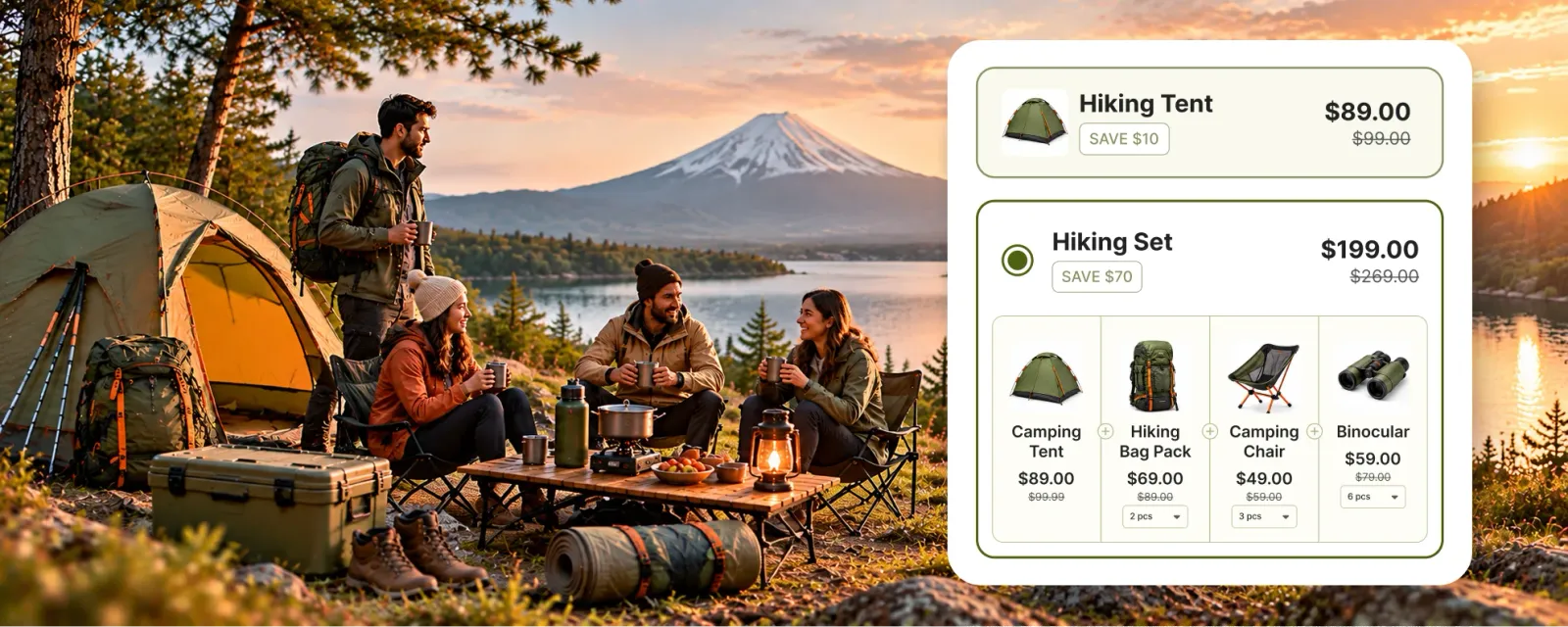
Why outdoor promotions behave differently
Outdoor shoppers do not buy single products. They buy a system that has to work together in conditions they cannot control: a sleep system, a shelter, a kitchen. If one piece is wrong for the weather or the trip, the whole system underperforms, and the camper finds out far from a shop.
Weight is also a cost. Every item is carried on the buyer's back, so a backpacker counts grams and a car camper does not. A bundle that suits one of them is often wrong for the other.
The places people camp add their own rules. Some areas require approved food storage, popular trails use permit systems, and fuel canisters and bear spray ship under hazmat limits. Gear also keeps value only if it is cared for correctly after the trip.
The strategies below start with weight and conditions, which generic bundling advice ignores, then add the group, timing and loyalty layers. Each one names the Pumper Bundles offer type that runs it without a developer.
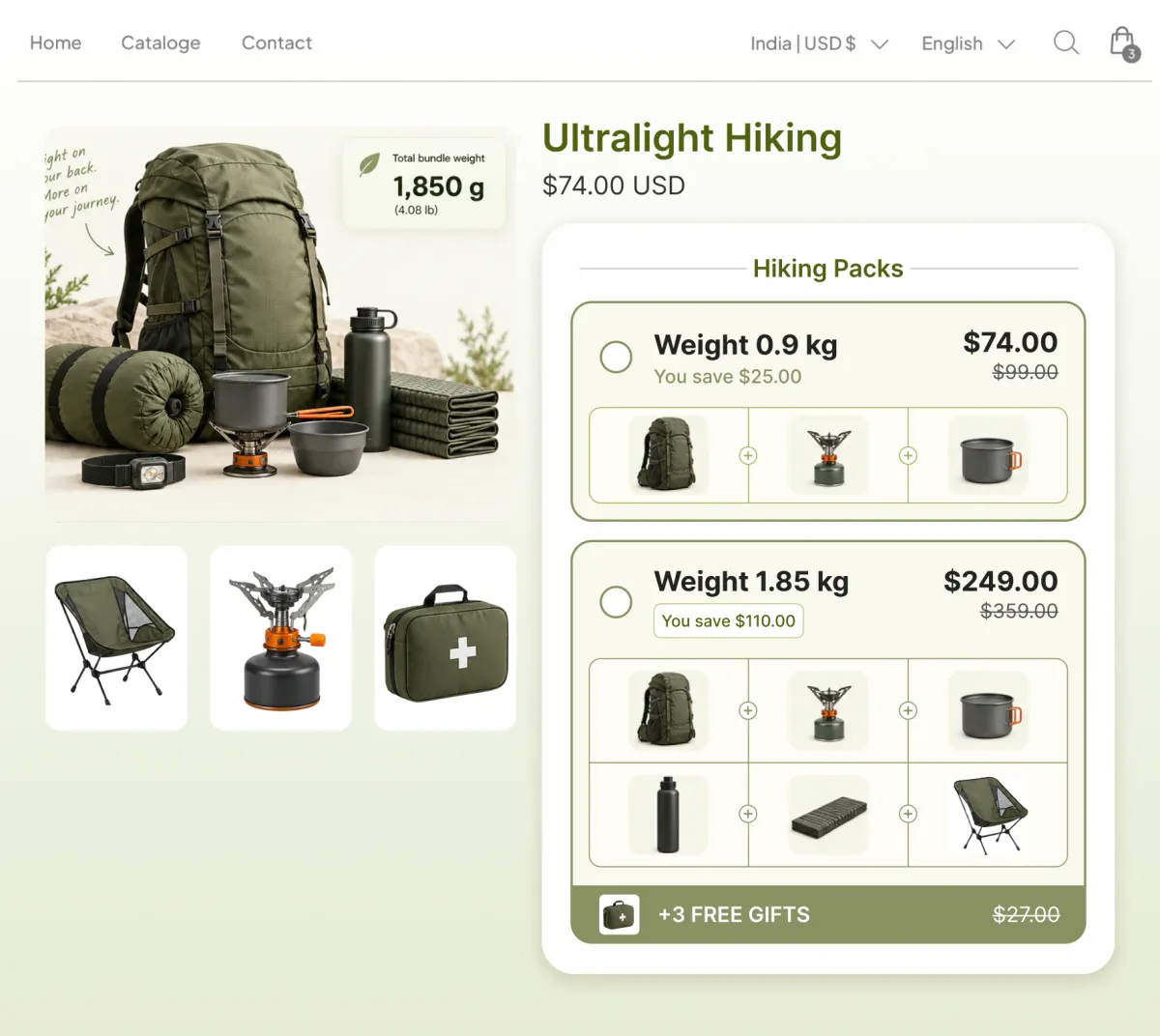
Pack-weight-aware bundles by trip style
The strategy no other outdoor promotion guide covers
Generic advice says to bundle the gear a trip needs. For a backpacker, the question is how much that gear weighs. A heavy, comfortable camp chair that delights a car camper is a poor addition to a bundle for someone carrying everything for four days.
Build separate bundles for each trip style, and show the combined weight on the bundle card. Backpackers can then compare options the way they already compare gear, and car campers are not offered gram-shaving upgrades they do not need.

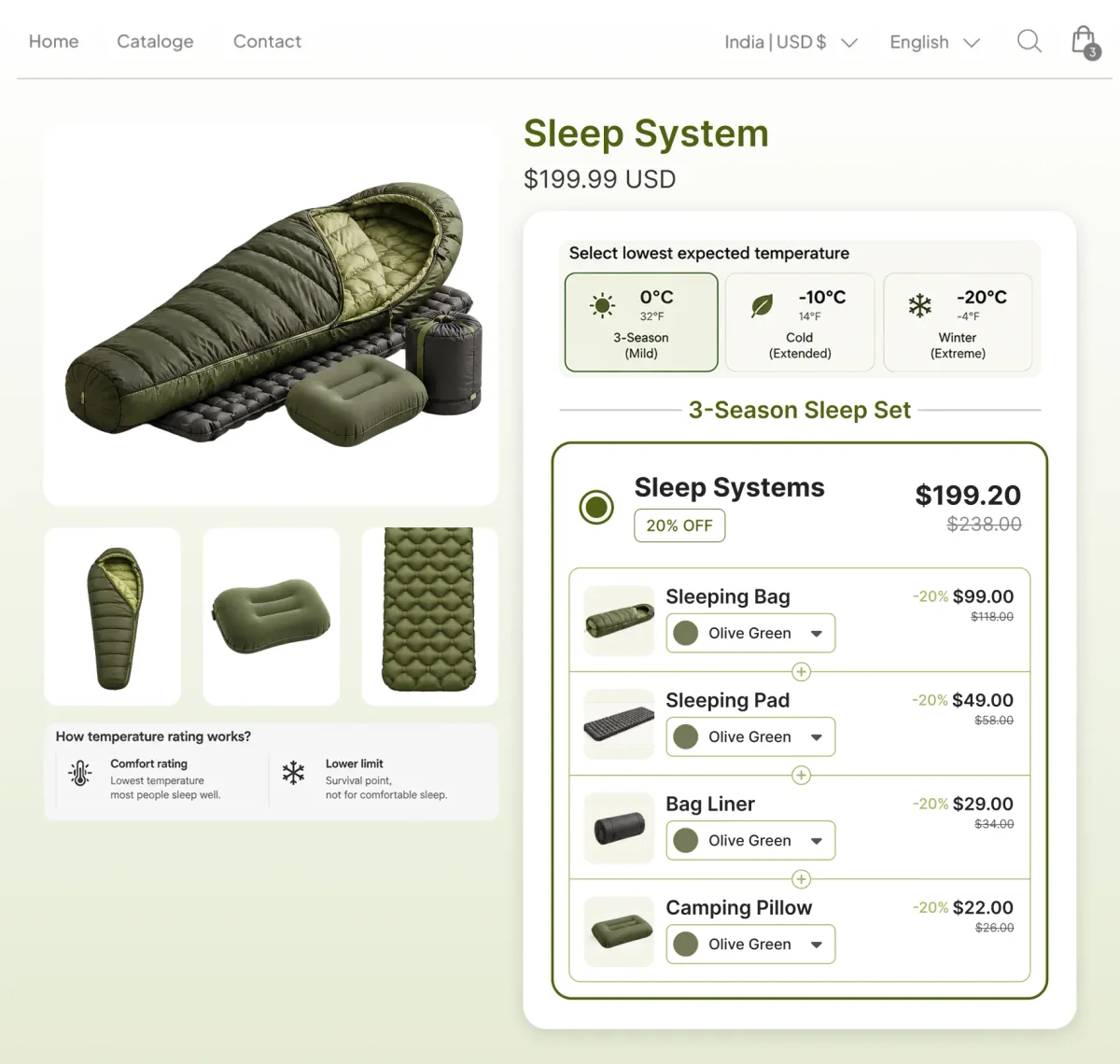
Sleep systems by temperature rating
A bag is only as warm as the pad underneath it
Sleeping bags carry a rating, and the standard test publishes a comfort figure and a lower limit figure. The limit is the point where a sleeper survives the night, not the point where they sleep well. A pad adds its own number, the R-value, which measures how well it resists heat loss into the ground.
Ask the shopper for the lowest temperature they expect, then show a bag and pad matched to it. A cold sleeper who buys a bag alone often returns it, and a bundle that includes the pad prevents that.
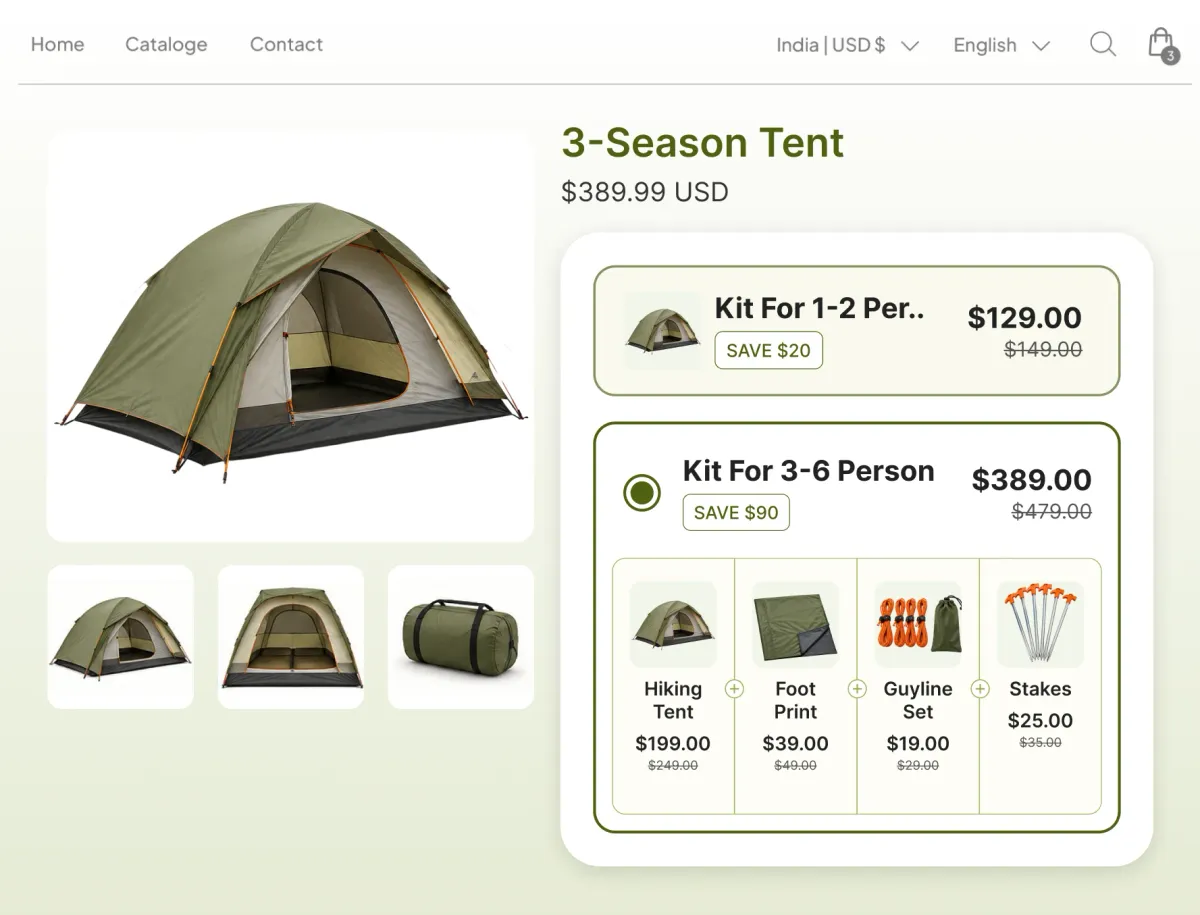
Shelter systems by capacity and season
The tent is a system with model-specific parts
A "2-person" tent is a floor area, and two people with their packs often find it tight. Many campers size up by one person for gear and comfort, so offer the larger option beside the label. Season rating matters as well: a 3-season tent is built for rain and wind, while a 4-season tent is built for snow load.
A footprint cut for the exact tent model protects the floor. A generic one that extends past the tent edge can collect rain and pool it underneath. Bundle the tent with its own footprint and stakes, and check whether your tent's seams come factory taped before adding a sealer.
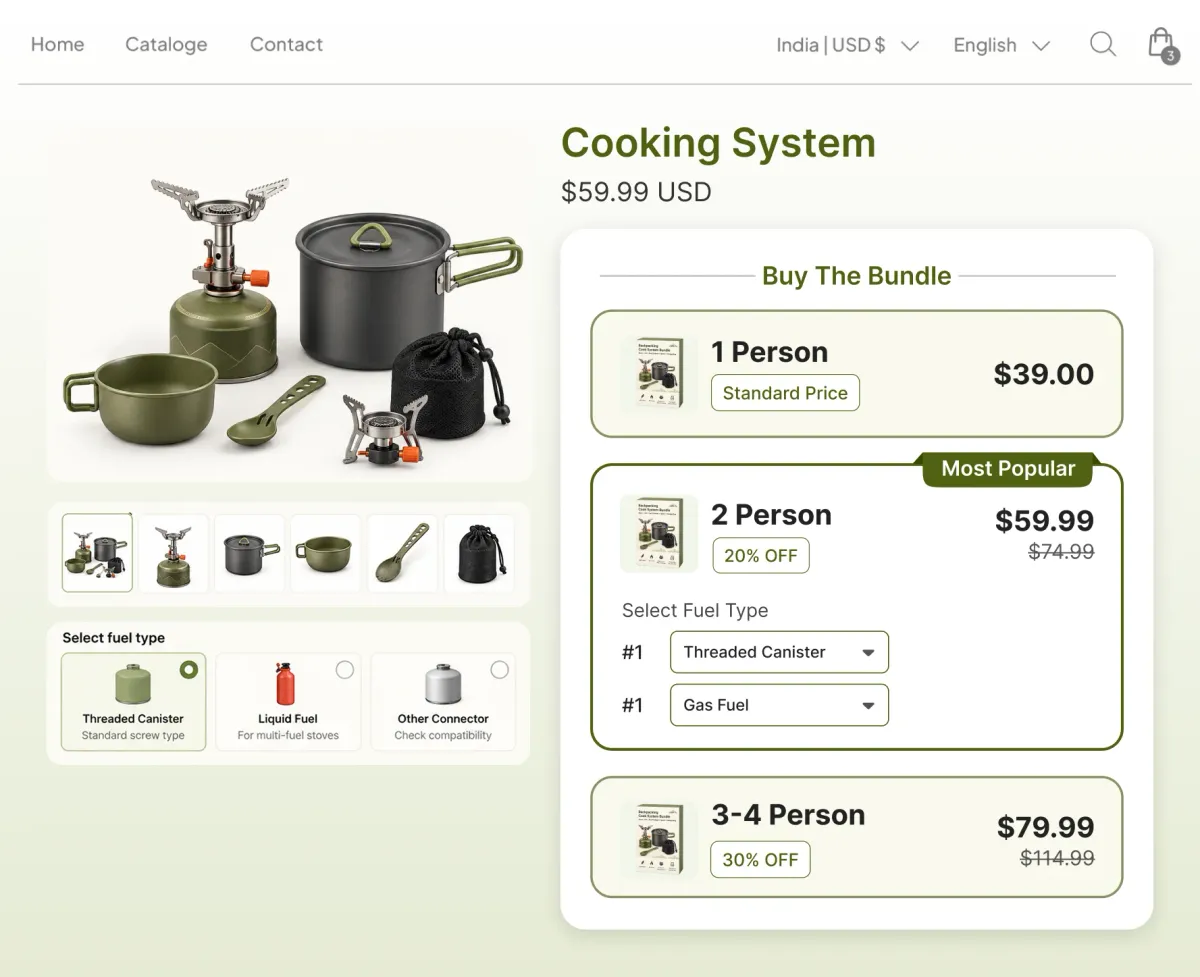
Cook systems matched to stove and fuel
A stove without the right fuel is dead weight
Most backpacking stoves screw onto a threaded fuel canister, while some systems use their own connector or run on liquid fuel. Pairing a stove with a canister it cannot use ruins the first meal and the first impression. Pot size should also match the group, since a solo pot is too small for a family of four.
Build each cook system around one stove and the fuel it takes, then add a pot sized for the group. Show the fuel standard in the bundle title so shoppers can check it against stoves they already own.
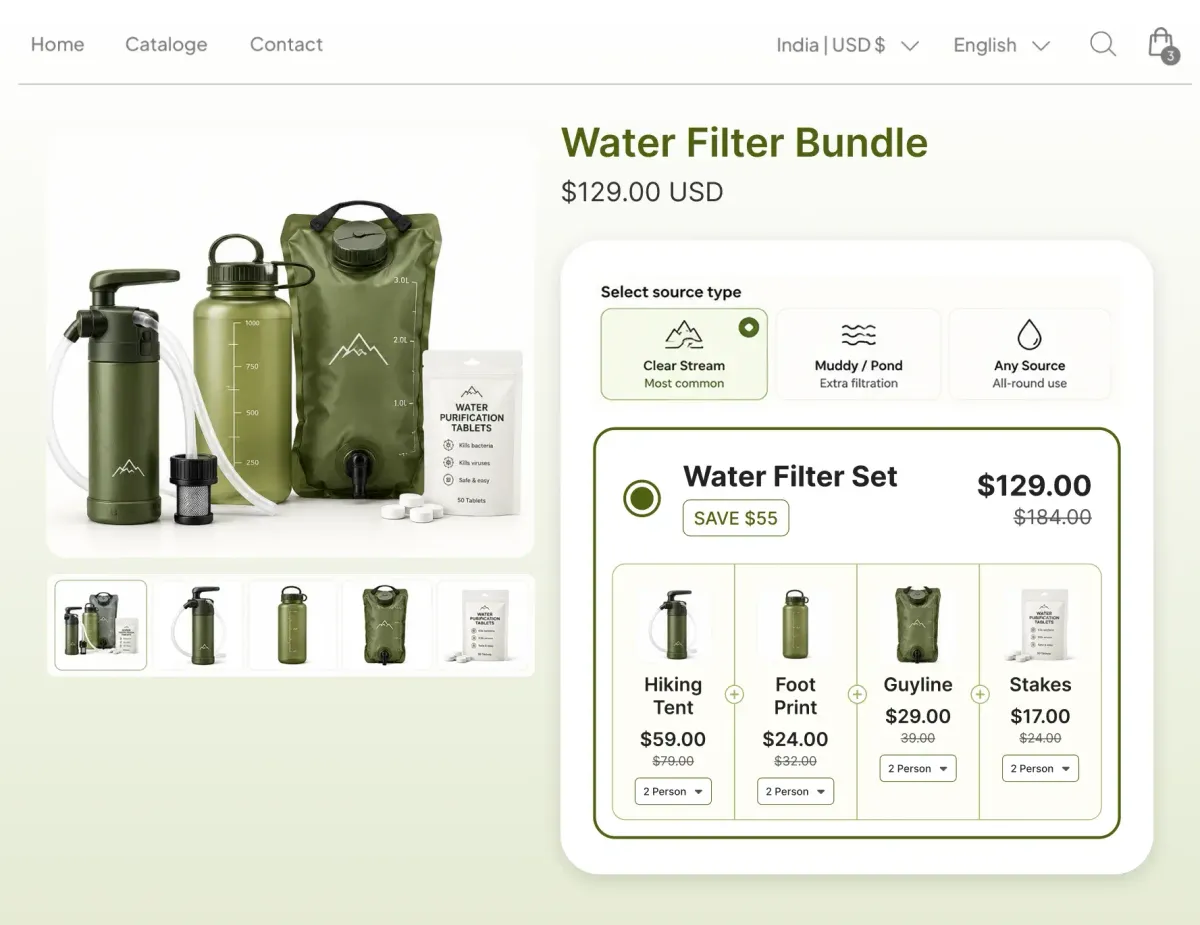
Water treatment by source and group size
The water source decides the method
Clear mountain streams, muddy lowland ponds and long dry stretches call for different tools. A filter handles many sources, tablets are a light backup, and a larger group needs more capacity than a solo hiker. Many filters use a standard thread, so bottles and bladders only work if they match it.
Bundle a filter with the bottles that thread onto it and a tablet backup. A filter with hollow fibers can be damaged if it freezes, so cold-weather buyers should also get a note on keeping it warm.
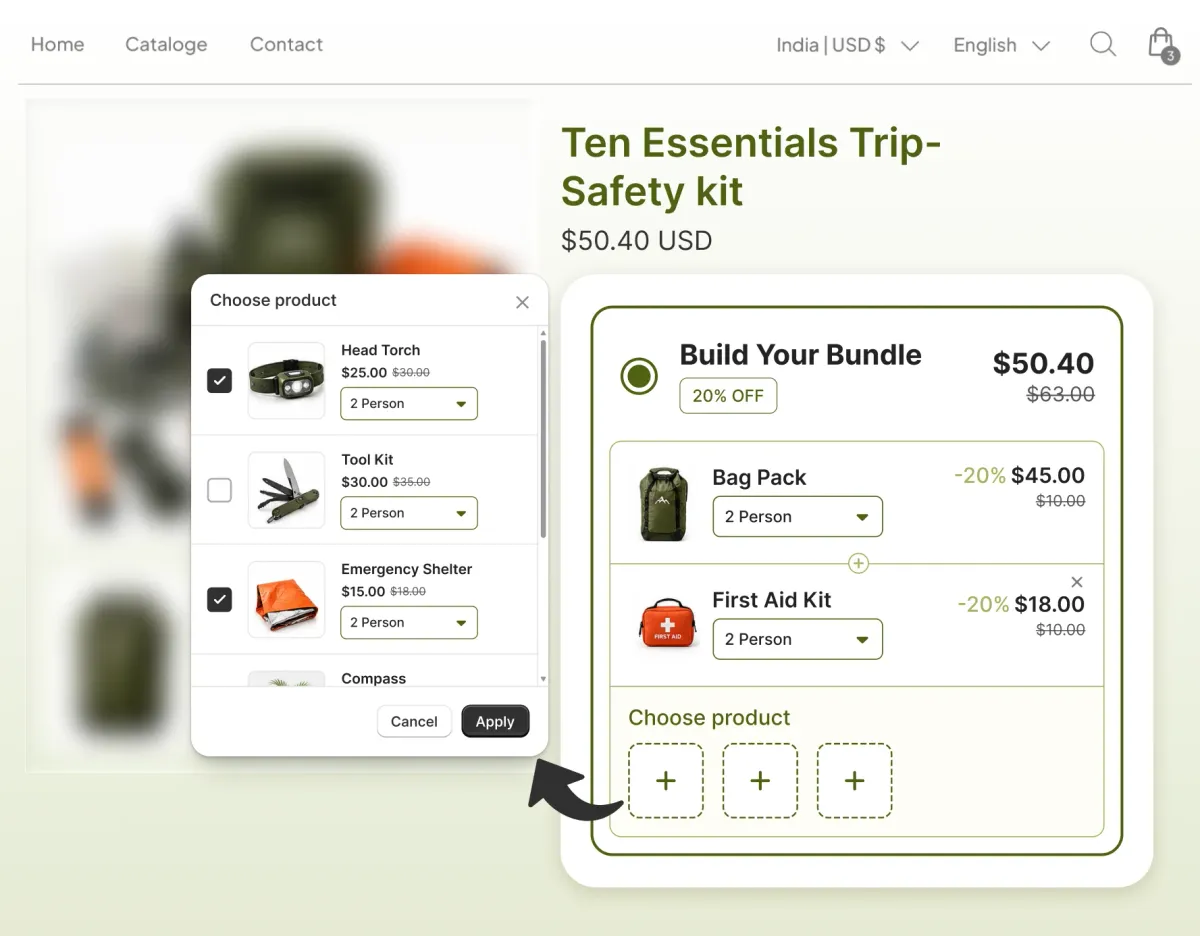
Ten Essentials trip-safety kits
Sell the checklist that responsible hikers already carry
The Ten Essentials is a long-standing safety checklist: navigation, a headlamp, sun protection, first aid, a knife or repair kit, fire, emergency shelter, extra food, extra water and extra clothing. Hikers know the list, and many are unsure whether their pack covers all ten.
A kit that fills the gaps turns that uncertainty into a purchase. Build it by trip type (day hike, overnight and winter), since the contents change with the conditions.
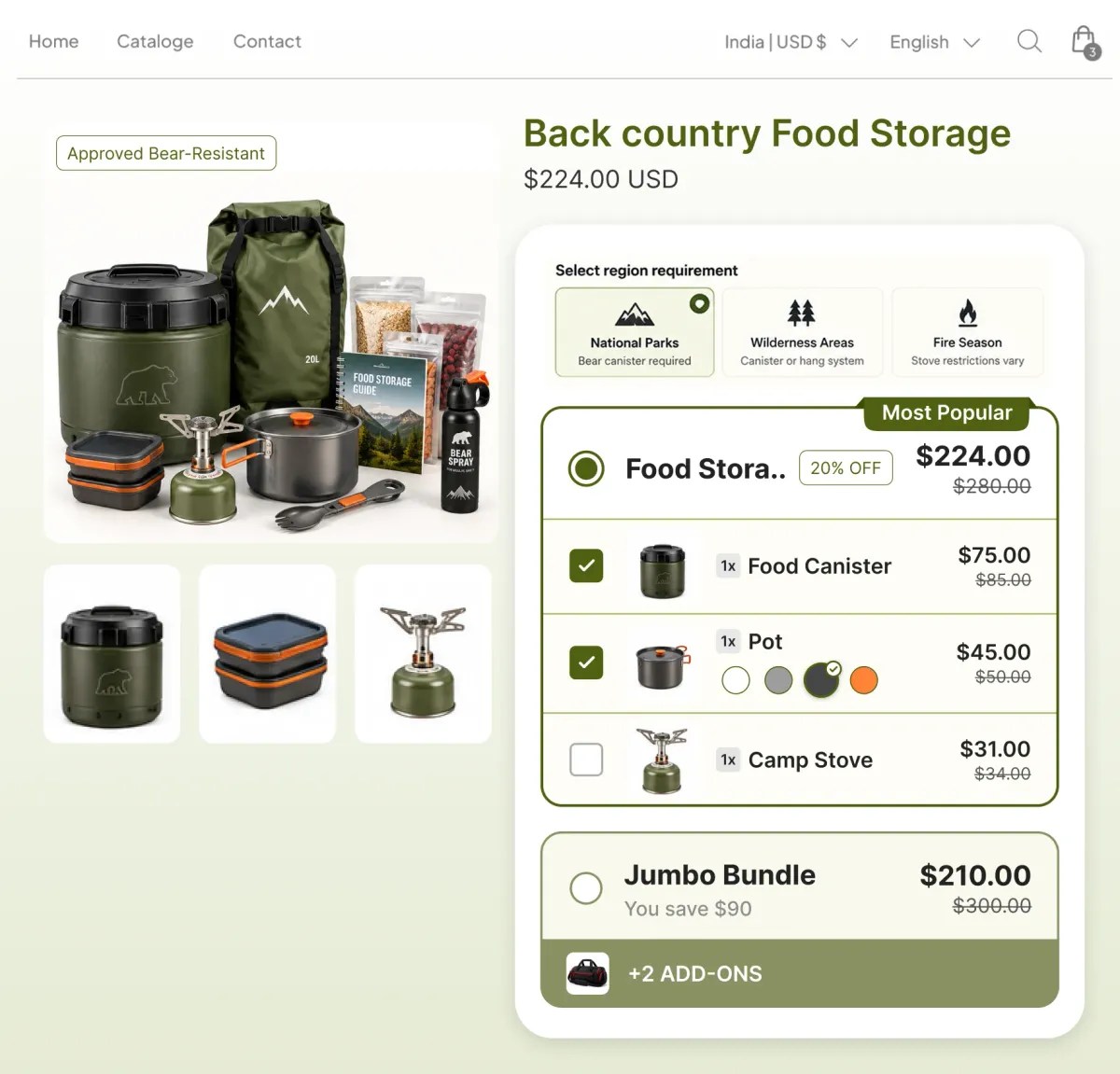
Land-manager requirement kits
Some places set the gear list for you
Some parks and wilderness areas require approved bear-resistant food storage, and the approved models are set by the land manager. Others require specific permits or stove rules in fire season. A camper heading to one of these places must have the right item, or they cannot camp there.
Build kits for the regions you serve: an approved canister, a dry bag and a food-handling guide. Link to the land manager's own rules, and let the shopper confirm the requirement for their destination.
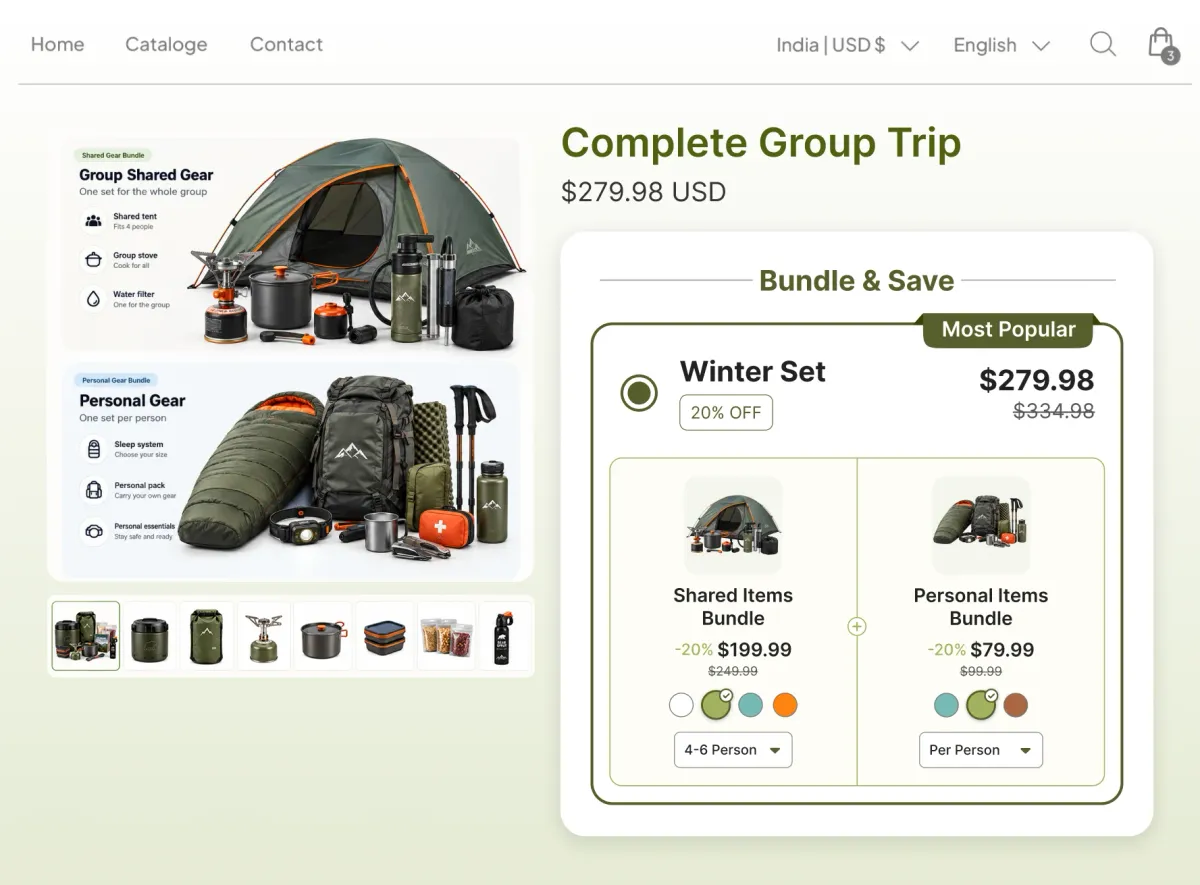
Shared and personal gear splits for groups
Four friends need one stove, not four
Groups share some gear and carry other gear alone. One tent, one stove and one filter can serve a party, but each person needs their own sleep system and pack. Selling the same list to every member leaves the group with duplicate stoves and no one carrying the filter.
Offer the shared set and the personal set as separate bundles, then show how they split by party size. A group organizer buys the shared set once and sends the personal set link to everyone else.
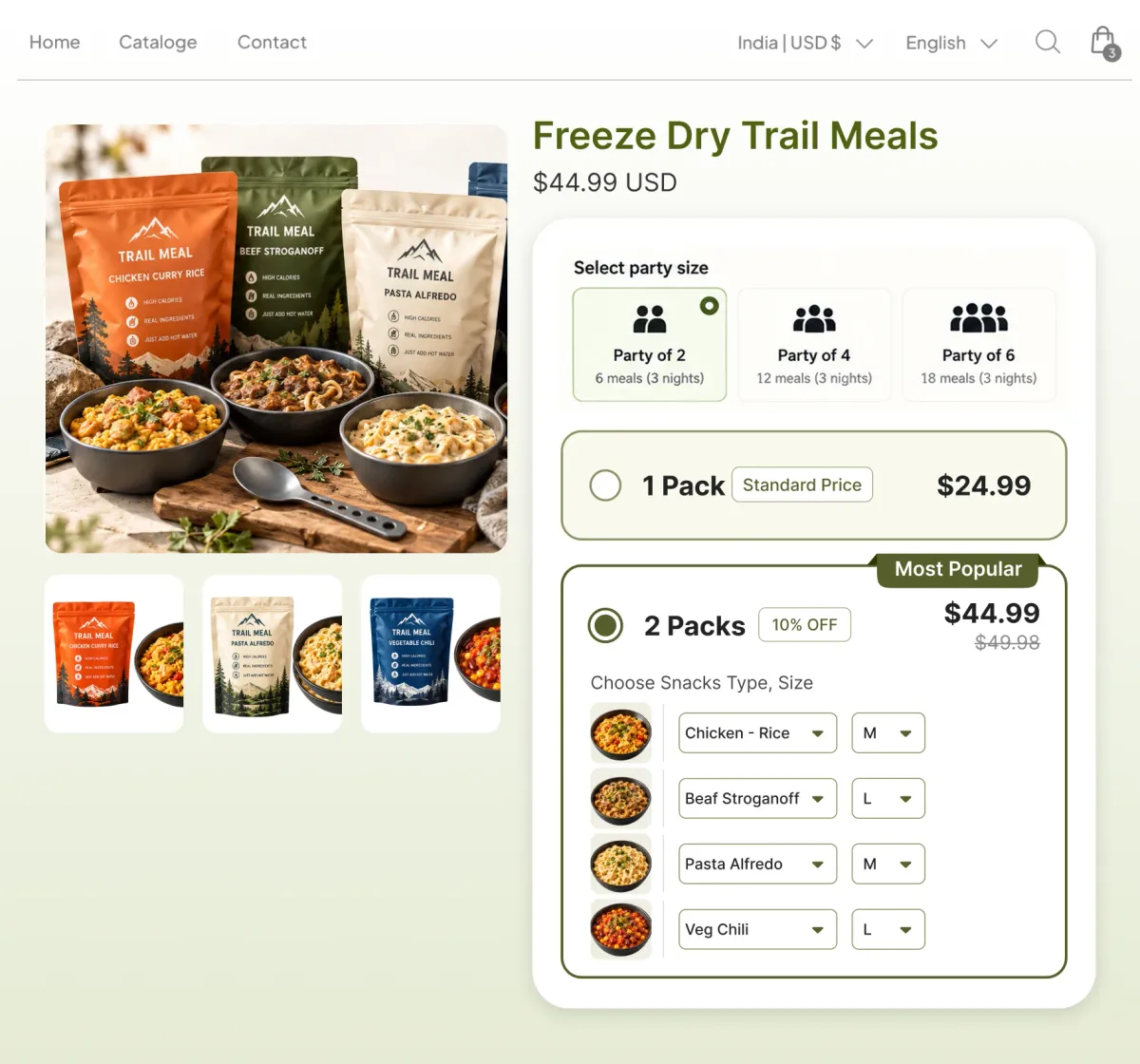
Party-size quantity tiers for trail food
Trip planners count people and nights, not pouches
A trip planner works out food as people multiplied by nights. Hard exertion raises calorie needs, so a four-night trek needs more than a weekend stay. Quantity tiers named by party size let the planner pick their group and see how many meals it covers.
Show the nights covered on each tier, and add a small buffer option for a delayed return. A buffer day of food is a common outdoor habit, and it helps AOV without feeling like an upsell.
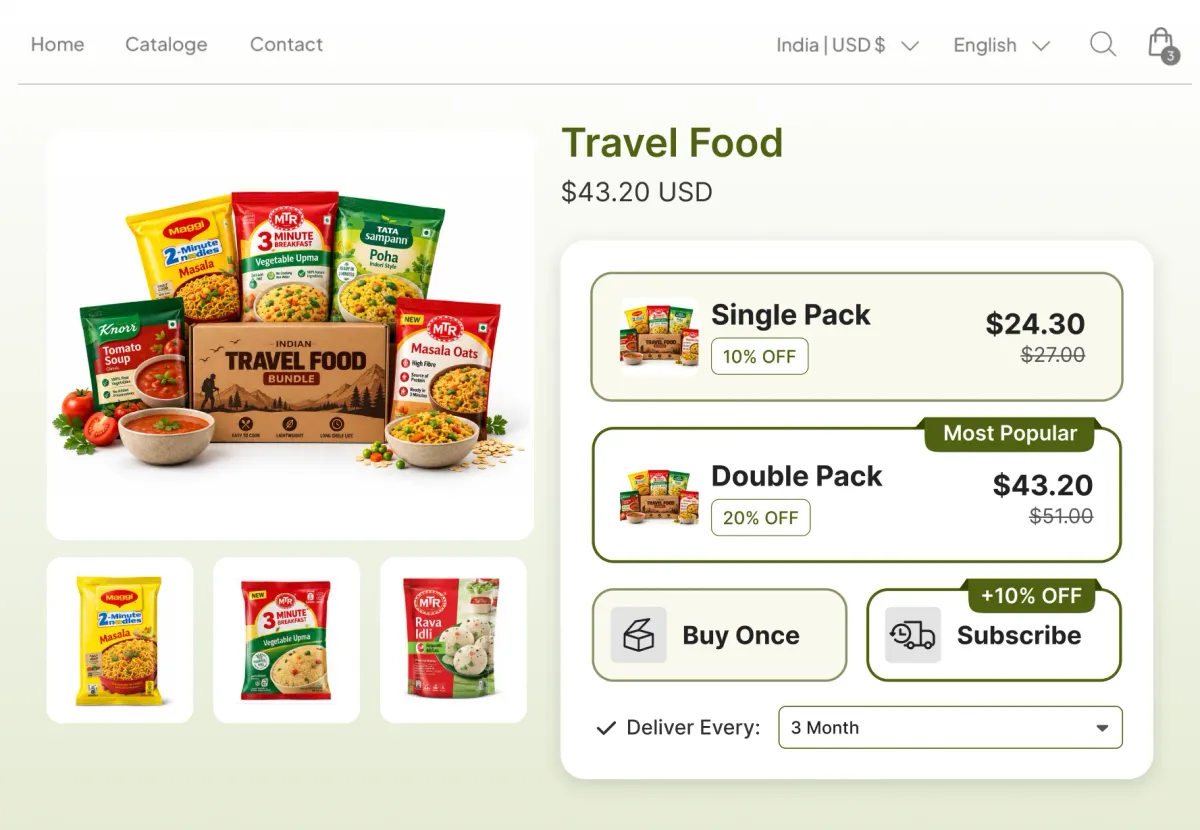
Trail food subscriptions by trip rhythm
Consumption follows the number of trips, not the calendar
A weekend regular goes through trail food every month, while a seasonal hiker uses it in a few concentrated bursts. A single cadence leaves one of them with a pile of pouches and the other with an empty pantry.
Label the cadence options by trip rhythm, for example weekend regular, monthly adventurer and seasonal trekker. Treatment tablets and drink mixes follow the same logic and can join the same order.
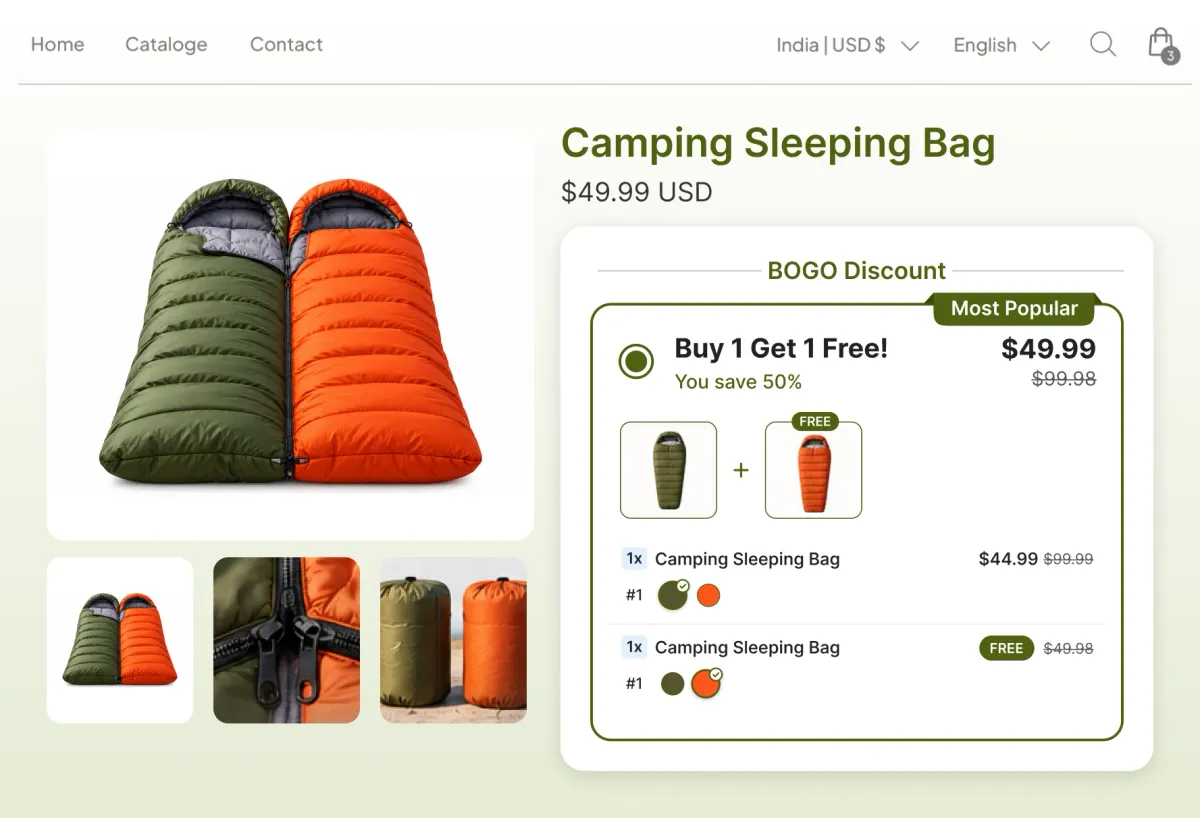
Zip-together partner BOGO
Some bags are built to join, but only as a left and right pair
Many sleeping bags can be zipped together into a double, but only when one has a left-hand zip and the other a right-hand zip of the same model. Two bags with the same zip side cannot join, and an offer that sends them out together creates a very specific disappointment.
A buy-one-get-one offer suits couples and friends who camp together. Set it so the second bag is the opposite zip of the first, and say so on the product page.
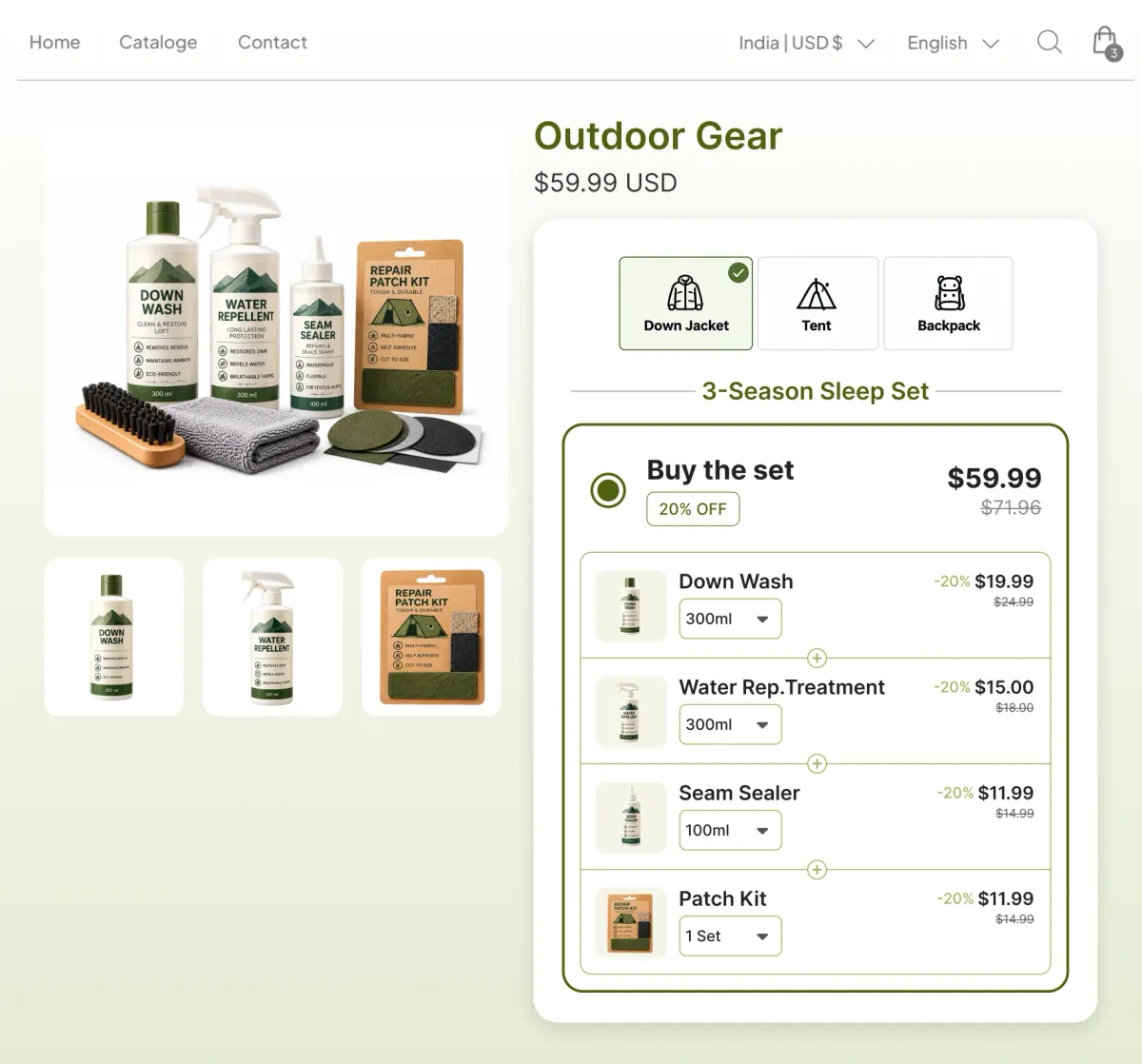
Gear care bundles by fabric
The wrong wash can damage the gear it was meant to clean
Regular detergents can leave residue that hurts the water repellency of a shell jacket. Down needs its own wash and a careful dry to keep its loft, and synthetic insulation has different needs. A shopper who washes an expensive jacket with the wrong product often ruins it.
Offer care bundles tied to the fabric of the item they bought: a wash, a re-proofing treatment and a repair patch set. A customer who protects their gear keeps using it, and keeps buying from the brand that told them how.
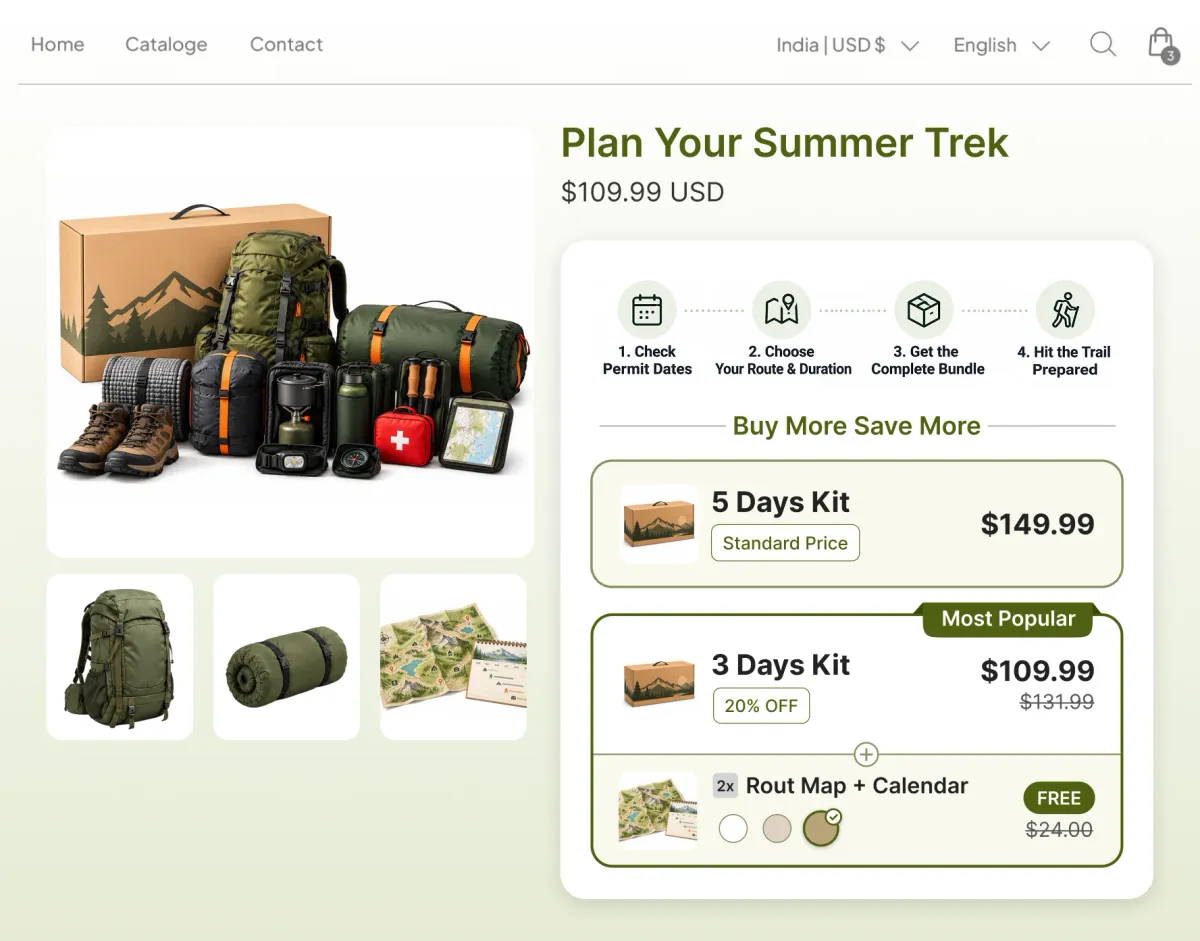
Permit-window trip-planning bundles
Trips are planned months before they are packed
Many popular trails use permit systems with application windows well ahead of the season. A hiker who has just won a permit is committed, and starts buying gear for that exact trip. That moment of commitment is the best time to offer a bundle.
Build trip bundles for the best-known routes, tied to the length and conditions of each, and time your promotion to the application and lottery dates. The shopper meets a bundle built for a trip they have already decided to take.
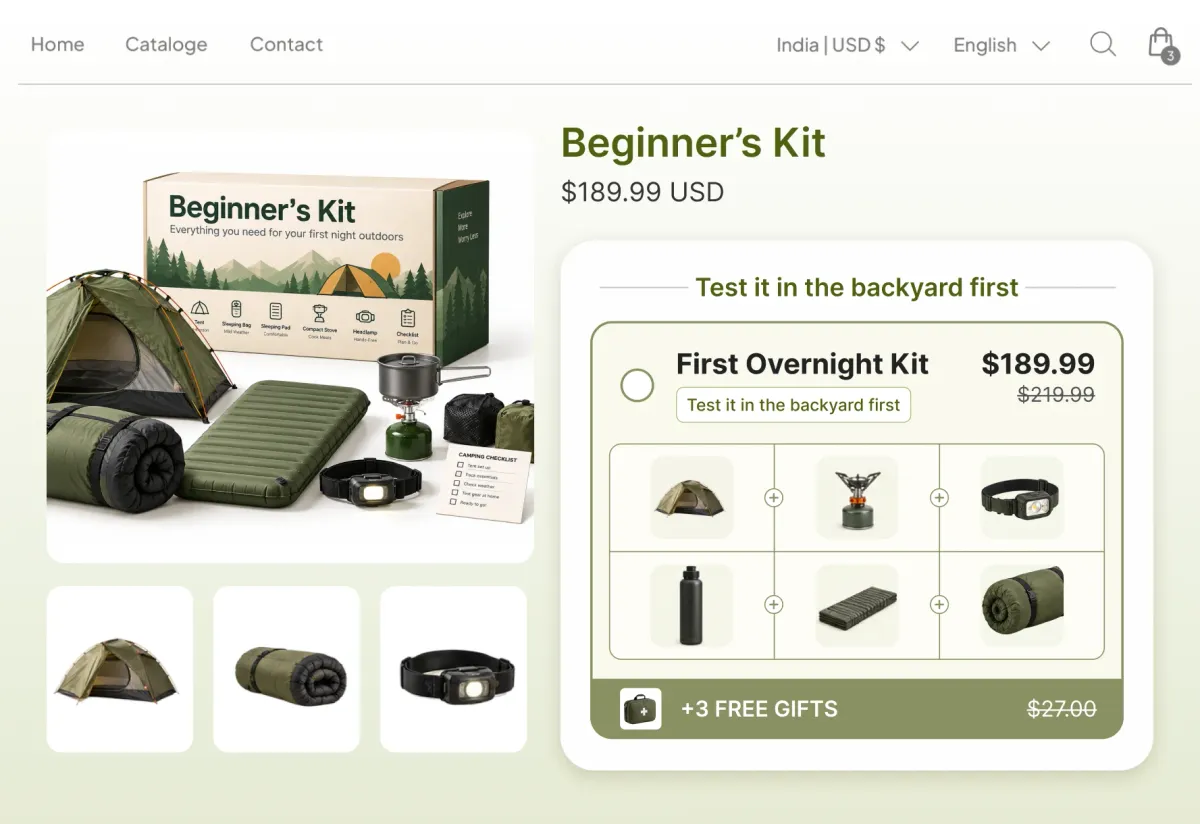
First-overnight starter kits
A new camper's biggest fear is a bad first night
A first-time camper faces a long list of unfamiliar products and a real fear of choosing wrong. A starter kit built around one easy overnight removes the guesswork, with every piece chosen to work together for mild weather and a short walk.
Include a plan for a backyard test. Pitching the tent and lighting the stove at home catches mistakes while help is still close, and it builds the confidence that brings the customer back for the next trip.
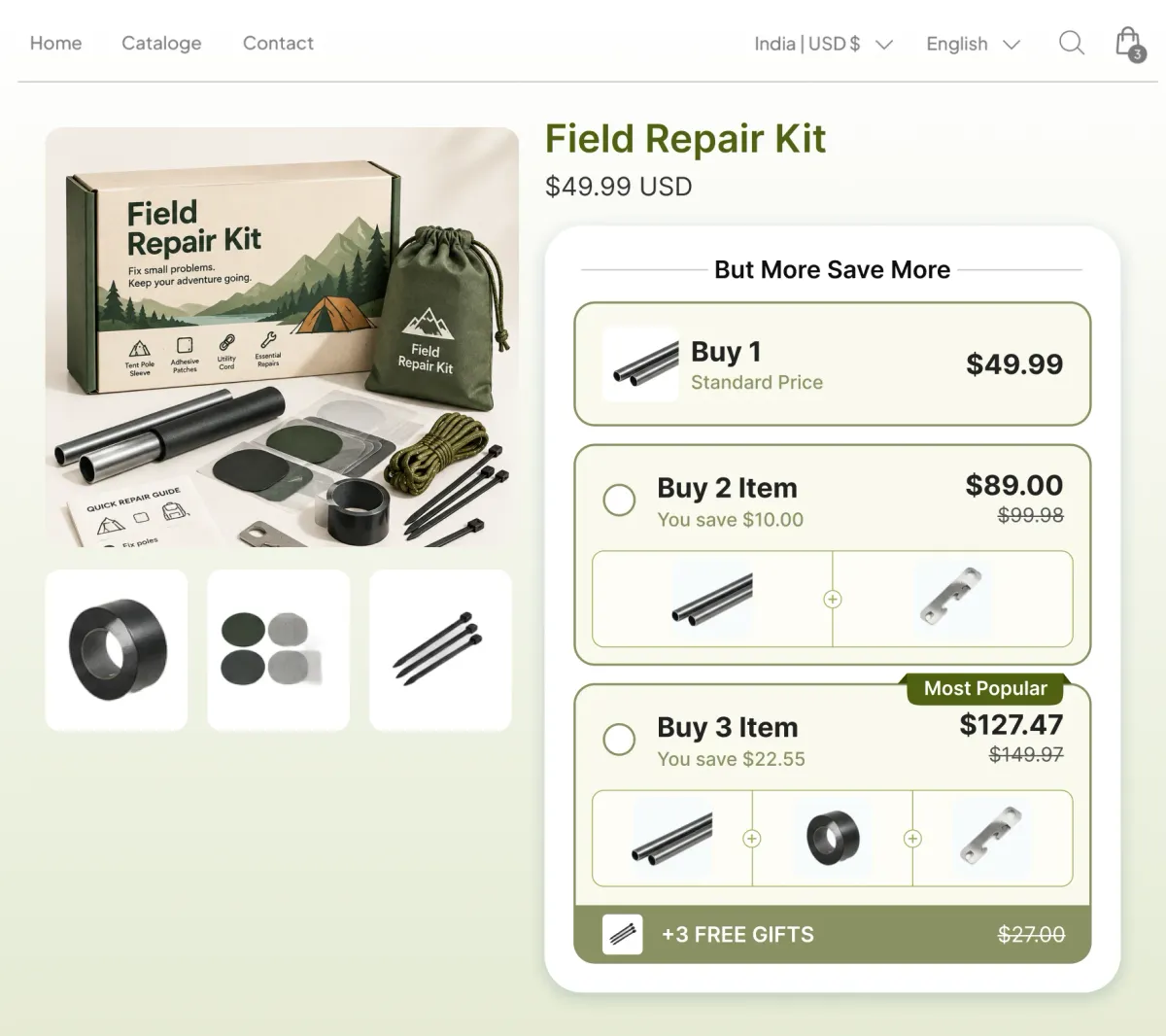
Field repair gifts
The small item that saves a trip is worth more than a discount
A snapped pole, a torn pad or a split seam can end a trip far from a shop. A compact repair kit with a pole sleeve, adhesive patches and cord weighs almost nothing and costs the store little. Customers value it because it solves a problem they fear.
Offer the kit as the reward for reaching a quantity tier, and pick the kit that suits the product the tier sits on. A pad patch suits a pad offer, and a pole sleeve suits a tent offer.
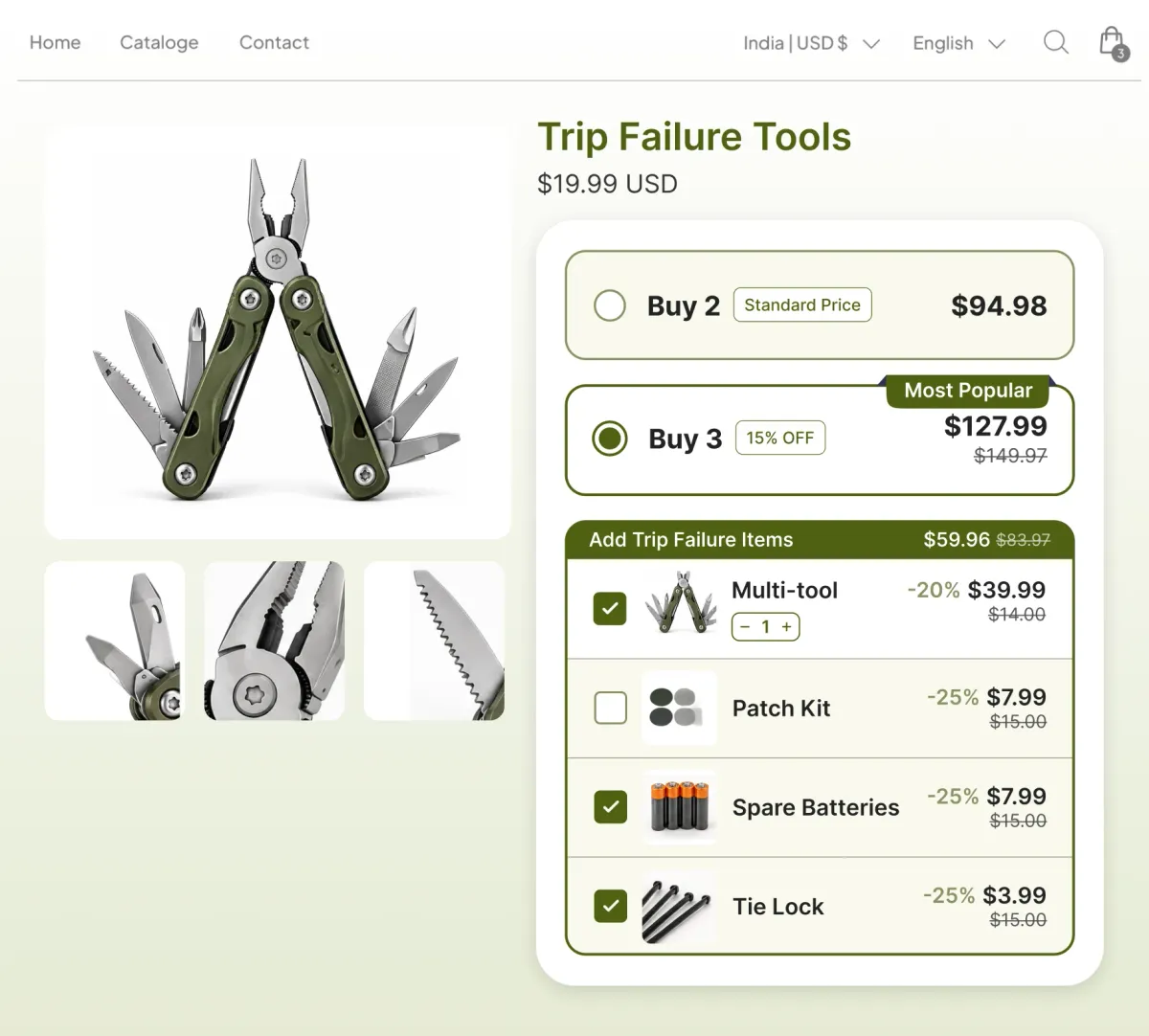
Post-purchase upsell: the trip-failure items
The item they forgot is the one that ends the trip
Some items are forgotten until the moment they fail. After a tent order, offer the matching footprint and spare stakes. After a headlamp, offer spare batteries. After a pad, offer a patch kit. Each one is small, and each one prevents a ruined night.
Payment details are already on file, so accepting takes one tap and the original order stays untouched.
Outdoor promotion calendar
Outdoor demand follows the seasons and the trip-planning cycle. This month-by-month map shows which strategy fits each period, using Northern Hemisphere timing. Shift it by region for the Southern Hemisphere or for warm climates.
Self-audit: how bundle-ready is your store?
Score your current setup against these six dimensions before you implement the strategies above. Outdoor brands most often miss product weights and temperature ratings, even when the rest of their bundling is solid.
The bars are an illustrative self-check, not measured data. Use them to spot where your own setup is thin.
From solo stores to 8-figure brands, teams trust Profit Pumper to grow their revenue.
Consistently rated 4.9 stars on the Shopify App Store for ease of use and reliability.
Install, pick a template, configure your offer, and go live. No coding or developers needed.
Frequently asked questions
How is outdoor bundling different from bundling in other categories?+
Can a bundle cause returns in this category?+
Do I need a developer to set these up on Shopify?+
Which strategy should a small outdoor brand start with?+
How do I serve ultralight backpackers and car campers from one store?+
Your offers. Configured, not discounted.
Set up weight-aware bundles, temperature-matched sleep systems and party-size trail food tiers on your Shopify store in minutes, with no developer or theme edits needed.
Try Pumper Bundles Free